Mitigating Self-Improving Agent Fragility: Why Versioned Workspaces Are Critical for Enterprise Systems
Stop silent runtime drift in autonomous LLMs. Learn how versioned workspace architectures fix self-improving agent fragility and memory state corruption.
When your multi-turn autonomous agent loops through iterative code refactoring or recursive workflow optimization, how do you prove that step fourteen didn't silently invalidate step two?
If you are relying on standard agentic loops, you can't.
Enterprise teams are rushing to deploy autonomous workflows under the assumption that iterative self-improvement equals progressive convergence. It doesn't. Without deterministic controls, autonomous multi-turn loops frequently suffer from catastrophic state corruption, task-order regression, and cascading underspecification. Doing nothing means letting invisible execution drift degrade mission-critical operations without firing a single conventional error code.
In our experience building and stress-testing enterprise agentic systems across distributed environments, we have consistently observed that the majority of catastrophic agent failures are not raw model hallucinations. They are memory workspace collisions. When an autonomous system modifies its own context, edits working files, or refines intermediate plans in an unversioned scratchpad, downstream decision branches compound prior statistical noise. A single sub-optimal heuristic at step three morphs into complete task derailment by step ten.
Here is what most framework evangelists will not tell you: append-only context windows and unconstrained working memory are architecturally bankrupt for mission-critical enterprise autonomy. Handing an LLM an mutable workspace without atomic rollbacks is the modern equivalent of letting concurrent production microservices write to an unversioned global database without ACID guarantees. It is an anti-pattern that guarantees brittle, unrepeatable execution runs.
Recent empirical research on cascading multi-turn agent fragility and evaluation drift underscores how severely task ordering and unmanaged state mutations compromise autonomous reliability. When agents attempt self-correction without strict operational boundaries, variance explodes.
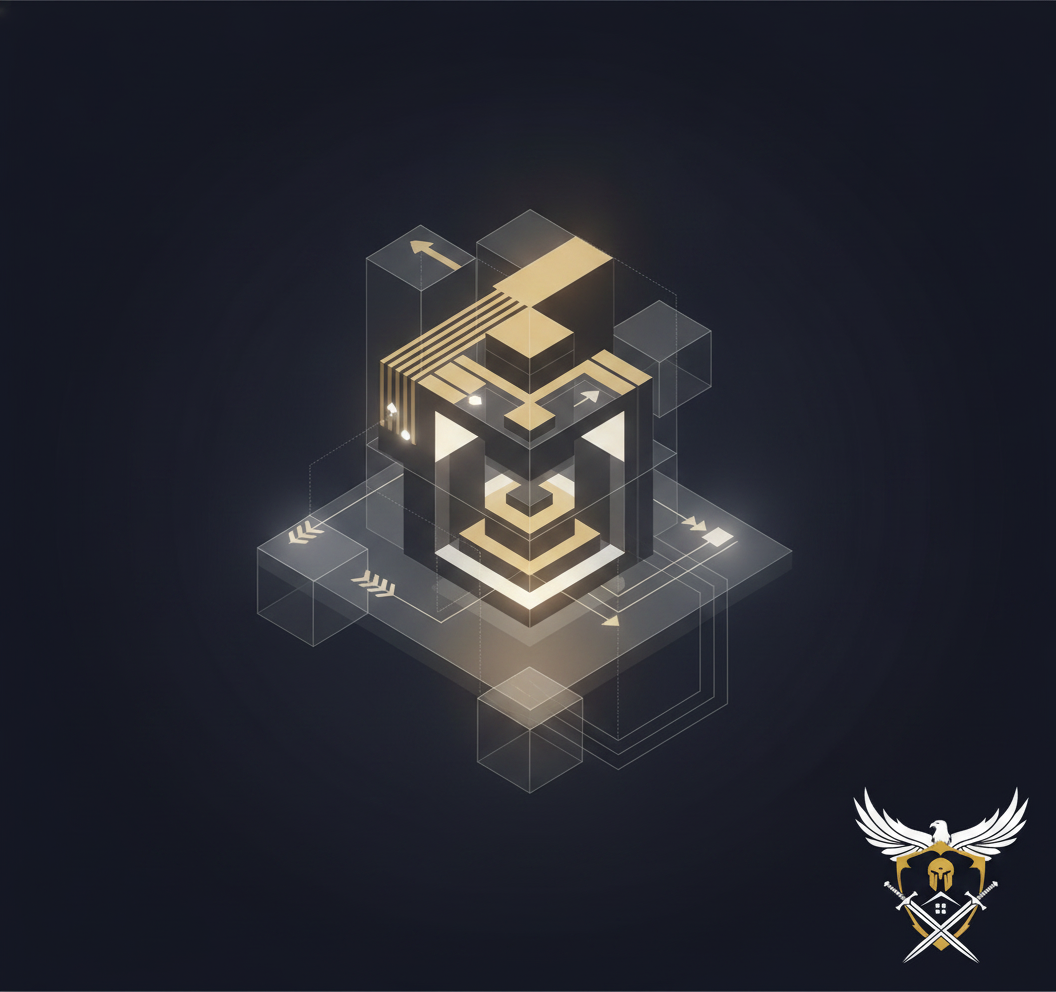
To achieve true enterprise-grade determinism, principal architects must decouple an agent's reasoning path from its mutable environment using a StagedWorkspace architecture. This framework enforces three mandatory structural invariants:
- Atomic State Snapshots: Every tool execution, memory write, or plan revision creates an immutable commit hash. If evaluation metrics drop or validation steps fail, the agent reverts immediately to the last verifiable baseline rather than attempting speculative self-repair on contaminated data.
- Deterministic Task Ordering: Dynamic sub-task generation must pass through a strict dependency graph validator to prevent cyclic re-ordering and state thrashing.
- Ephemeral Context Sandboxing: Agent sub-routines execute in isolated, sandboxed context branches, merging back into the primary task state only when strict regression gates pass.
Transitioning from speculative prompting to hardened version-controlled memory workspaces is the single most urgent engineering upgrade required for multi-turn agent evaluation frameworks today. Without strict state isolation and deterministic task trees, autonomous systems will remain expensive, unpredictable prototypes.
Audit your execution pipelines now and establish deterministic workspace isolation before unmonitored runtime drift corrupts your production agent workflows.
👉 See what's inside: https://kema.knightbyrd.com/go/self-improving-agent-fragility/blog
KnightByrd Tech researches fast-moving digital trends and publishes practical, tested products and guides. About the publisher →