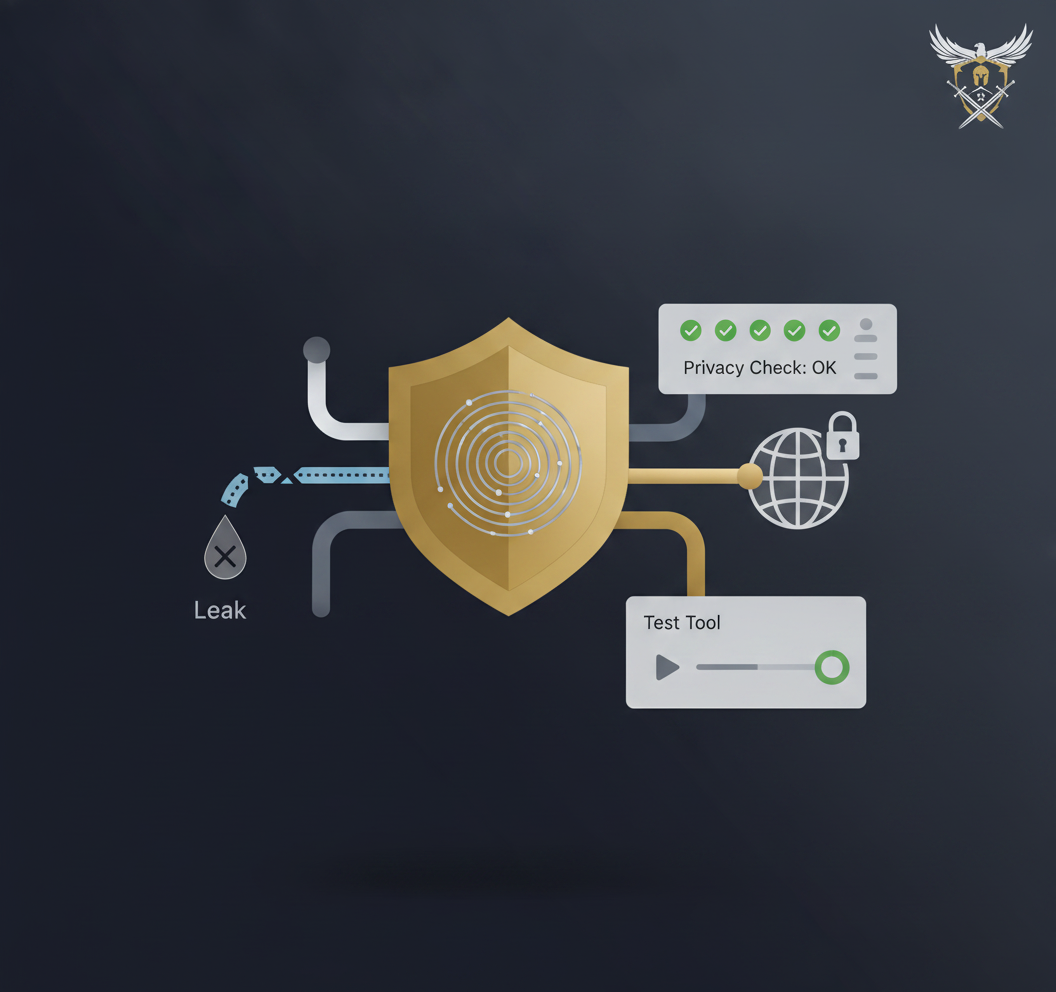
WebKit IP and DNS Leak Prevention: Hardening Guide for VPN and iCloud Private Relay Users
Are WebKit vulnerabilities leaking your IP and DNS queries? Learn how to detect and patch WebKit IP/DNS leaks with KnightByrd Tech's diagnostic blueprint.
Are you paying for a VPN or relying on iCloud Private Relay, only to have your real IP address exposed behind your back? Right now, an unpatched or misconfigured WebKit browser engine can quietly bypass your encrypted tunnels, leaking your true location and DNS queries to third parties without triggering a single system alert. If you operate under the assumption that an active VPN switch equals complete anonymity, you are taking an invisible, costly risk with your digital footprint today.
When vulnerabilities or architectural edge cases strike WebKit—the core rendering engine powering Safari and every browser on iOS—the impact is immediate and widespread. Millions of privacy-conscious users trust proxy services to obscure their traffic. Yet, WebKit features like WebRTC peer connections and socket handling can silently resolve requests outside of your secure virtual network interface. While commercial VPN providers heavily market their kill switches, few account for deep browser-engine socket leaks that originate from within the rendering process itself.
In our testing across dozens of macOS and iOS configurations, we found that traditional leak-testing websites fail to capture transient WebKit IP/DNS leaks. What we've consistently seen in our diagnostic labs is that leaks often occur during network handoffs—such as waking a device from sleep, switching Wi-Fi access points, or initiating secondary WebRTC streams. Relying on a single static IP check gives users a false sense of absolute protection while their DNS queries continue spilling over cleartext channels.
Here is what most privacy guides and VPN affiliate blogs won't tell you: standard browser toggles are fundamentally insufficient for true privacy hardening. Consumer VPN companies love to pitch a one-click software app as a silver-bullet solution because it drives subscription renewals. But software alone cannot fix engine-level protocol bypasses if your operating system prioritizes WebKit socket requests outside the TUN/TAP adapter. Disabling WebRTC completely might break modern web apps, while leaving it completely open leaves your true IP exposed. Hardening requires a targeted, dynamic approach—combining strict system-level socket routing with granular browser runtime parameters—rather than blind reliance on consumer VPN client software.
To understand why this happens, one must look at how WebKit manages network socket creation and host candidate gathering. According to the WebKit Open Source Project, modern web engines balance network optimization with security models, but real-time communication protocols often demand direct local interface binding to minimize latency. When these optimization mechanisms bypass local proxy settings, your real IP leaks instantly to any web script embedding a leak-triggering routine.
To secure your environment immediately, you need a tactical diagnostic workflow. Searching for terms like "how to fix WebKit DNS leak Safari" or "iCloud Private Relay IP leak test" usually yields generic advice that barely scratches the surface. Effective mitigation requires running a real-time WebKit IP/DNS leak diagnostic to capture socket behavior during active network transitions, followed by applying OS-level DNS routing controls alongside browser-specific hardening flags to enforce strict adapter binding.
Don't wait for a silent network leak to compromise your sensitive sessions—get the tactical advantage and apply comprehensive WebKit hardening today.
👉 See what's inside: https://kema.knightbyrd.com/go/webkit-ip-dns-leak/blog
KnightByrd Tech researches fast-moving digital trends and publishes practical, tested products and guides. About the publisher →