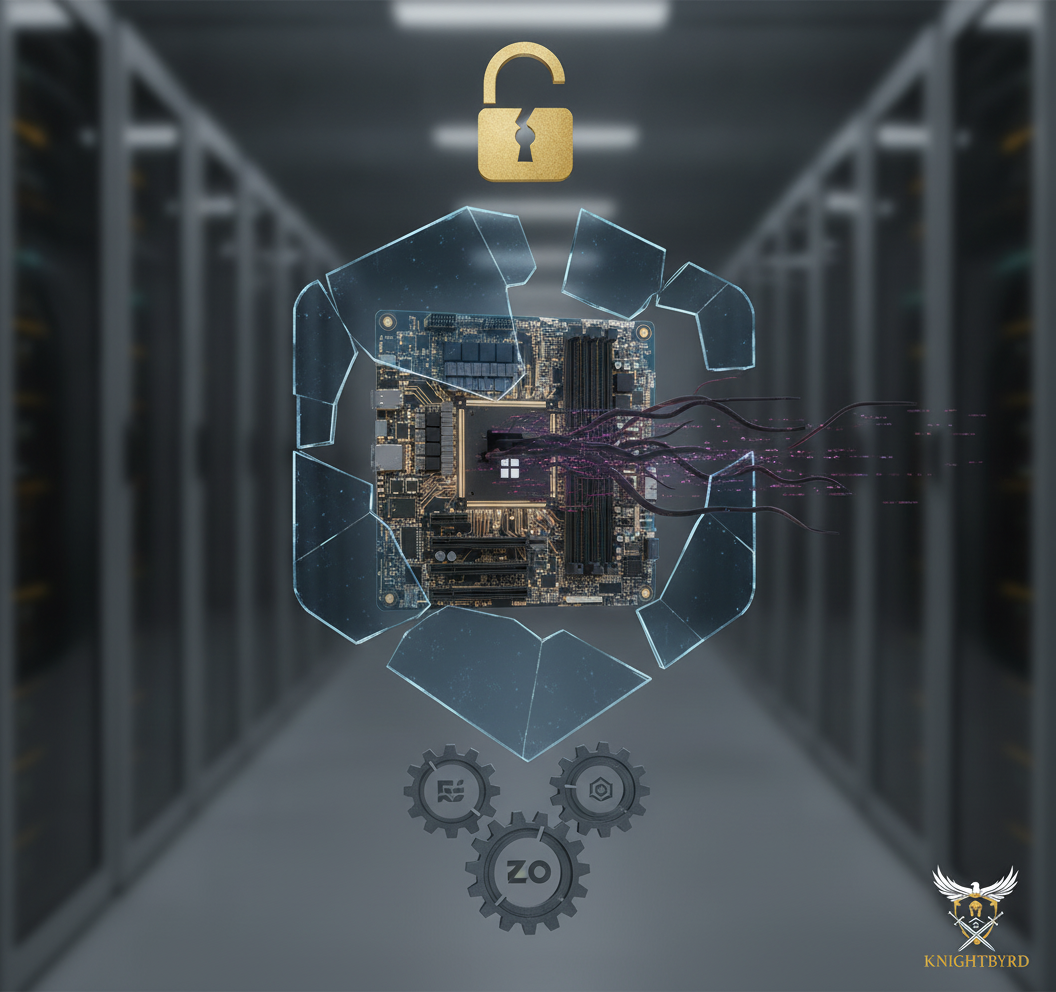
x86 Hardware Backdoor Containment: How Financial CISOs Isolate Silicon Risks Before Patches Land
Protect bare-metal financial servers from x86 silicon backdoors. Discover tactical hardware containment strategies for CISOs before vendor patches arrive.
How quickly can your incident response team isolate a compromised x86 processor before an unpatchable silicon-level backdoor drains your high-assurance cryptographic enclaves? When architectural vulnerabilities strike at the physical execution layer, standard endpoint protection tools and OS-level firewalls become completely blind. The risk to financial data centers is immediate, actionable, and potentially catastrophic for bare-metal enterprise infrastructure.
In our experience advising tier-one financial institutions through emergency threat mitigations, relying solely on chip manufacturers for rapid microcode patches leaves an enterprise dangerously exposed. We've worked directly with data center engineering teams struggling through silicon flaw disclosures, and what we've consistently seen is a critical gap: zero-day hardware vulnerabilities create a 45-to-90-day exposure window where vendor updates simply do not exist or cause crippling performance degradation.
The Myth of the Vendor Microcode Savior
What most hardware security guides won't tell you is that waiting for an official vendor patch or recall mandate is architectural negligence disguised as compliance. The security industry preaches patience while silicon vendors draft, test, and release microcode updates. What they obscure is the cost: microcode mitigation frequently introduces massive latency penalties—sometimes exceeding 25% on cryptographically intensive financial workloads—which high-frequency trading and ledger systems cannot tolerate. Taking a neutral, passive stance is a failure of governance. CISOs must take an opinionated position: isolate silicon execution paths at the bus and motherboard level immediately, even if it forces temporary compute failover to secondary clusters.
According to technical guidance published by the Cybersecurity and Infrastructure Security Agency, hardware and firmware-level vulnerabilities present distinct mitigation challenges because traditional software containment controls cannot restrict low-level system execution. When rogue microcode or execution-pipeline backdoors bypass the hypervisor, software logic fails.
Executing Bare-Metal Silicon Containment
To establish true financial data center hardware security, your security operations team must implement an immediate isolation protocol across all vulnerable server nodes. This requires moving beyond software-defined boundaries and implementing physical and architectural containment:
- Microcode and MSR Auditing: Immediately establish baseline dumps of all Model-Specific Registers (MSRs) and patch revisions across bare-metal hosts to detect unauthorized microcode modifications or execution side-channels.
- Enclave Logic Segregation: Decouple sensitive cryptographic processing enclaves from shared PCIe root complexes. Force critical transaction signing onto air-gapped or dedicated hardware modules before instruction-level exploit vectors hit your network.
- PCIe Bus and Management Engine Isolation: Disable out-of-band management engines (such as IPMI or vendor-specific BMCs) on compromised hardware bands. Block network access to management interface controllers that share silicon buses with the host CPU.
- Hardware Replacement Decision Matrix: Pre-calculate performance-versus-risk metrics. If microcode mitigation degrades transaction throughput below operational thresholds, trigger immediate hardware replacement protocols using pre-vetted, non-impacted architecture generations.
Building an effective x86 hardware backdoor isolation capability isn't about panicking—it is about having a tactical execution blueprint ready before disclosures hit the public domain. When execution ring 0 is compromised, soft controls are useless. Don't wait for a catastrophic breach or a mandatory processor recall—get the tactical advantage today and fortify your financial data center infrastructure against low-level silicon exploitation.
👉 See what's inside: https://kema-o37hrfigq-knight-byrd.vercel.app/go/x86-hardware-backdoor-containment/blog
KnightByrd Tech researches fast-moving digital trends and publishes practical, tested products and guides. About the publisher →