Did Your Bank Tell You to Move Money to a 'Safe Account'? It's a Scam. Here's What to Do Immediately
Did your bank call telling you to move funds to a safe account? It is an active scam. Learn the exact red flags and how to protect your assets right now.
If you are currently on the phone with someone claiming to be from your bank's fraud department telling you to transfer funds to a "safe account," "holding ledger," or "federal reserve escrow" to protect your assets: hang up immediately. It is an absolute scam.
No legitimate bank or credit union will ever ask you to transfer funds off your account, wire money to an external routing number, or authorize peer-to-peer payments to resolve a fraud alert. In this guide, we break down exactly how this attack vector works, what tells to look for, and the precise steps you must take right now to secure your funds.
How the "Safe Account" Impersonation Attack Works
The attack begins with manufactured panic. You typically receive an SMS alert that looks indistinguishable from your bank's automated alert system:
"[Bank Name] Security: Did you attempt a wire transfer of $2,480.00 to CryptoExchange LLC? Reply YES or NO."
When you reply "NO," your phone rings within seconds. The caller ID displays your bank's official customer support number or the local branch name. The caller identifies themselves as a senior fraud investigator, speaks in a calm, professional tone, and offers to help you reverse the suspicious transaction.
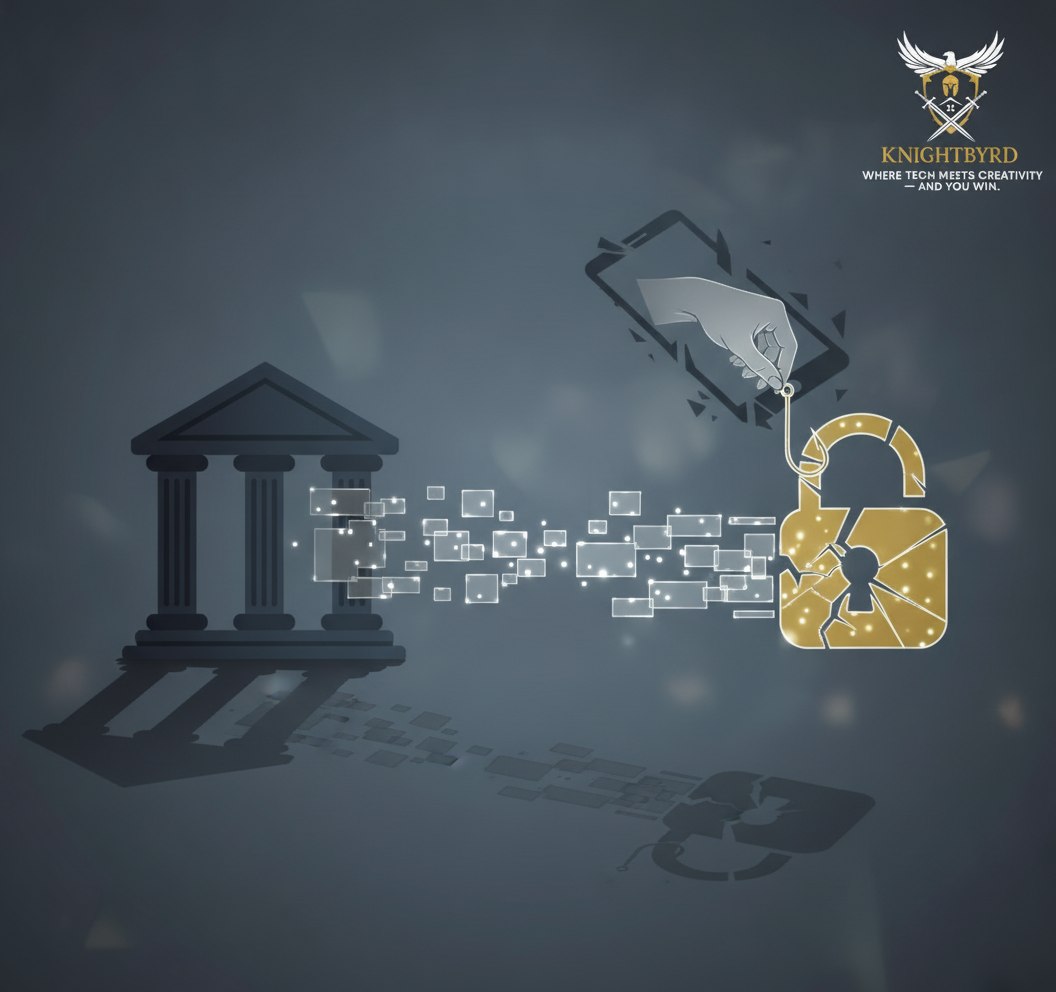
To "secure your balance while the compromised account is audited," the agent directs you to execute an immediate outgoing wire transfer, Zelle transfer, or external ACH transfer to a temporary, FDIC-insured "safe account." Once you authorize that transaction, your money is gone—routed instantly through money-mule networks and converted into untraceable cryptocurrency.
The Operational Tells: Why It Looks So Real
In our experience investigating digital fraud patterns at KnightByrd Tech, this specific scam succeeds because attackers leverage data aggregation before making contact. The caller will often read your home address, date of birth, and the last four digits of your Social Security number back to you to establish instant credibility. This data was not leaked by your bank; it was compiled from commercial data broker breaches and credential dumps.
Watch for these unmistakable red flags:
- The "Safe Account" Instruction: Any directive to move money to an external account, routing number, or digital wallet is fraudulent.
- Reading Back One-Time Passcodes: The caller asks you to read back a verification code sent to your phone. In reality, the attacker is initiating a password reset or wire request on your actual portal, and you are providing the multi-factor authentication (MFA) token to authorize it.
- Coached Scripting: The caller tells you: "If the branch teller or automated system asks why you are sending this wire, say it is for family assistance so they don't delay the safety transfer."
- Extreme Time Sensitivity: Claims that your account will be permanently frozen or drained if you do not complete the transfer while staying on the line.
The Hard Truth Most Security Guides Avoid
Here is our direct assessment: the financial industry's reliance on SMS-based two-factor authentication is dangerously obsolete. Banks routinely train consumers to expect numerical codes via text messages, creating a conditioned reflex that scammers exploit daily.
When an imposter asks for your text code while spoofing your bank's phone number, human psychology heavily favors compliance under stress. If your financial institution still relies primarily on SMS passcodes rather than hardware security keys (like YubiKeys) or dedicated authenticator applications, your account perimeter is fundamentally vulnerable to social engineering. You cannot rely on caller ID as a verification mechanism—telephony protocols were never built to enforce identity verification.
Step-by-Step Defense Protocol
If you have received this contact or started a transaction, execute these containment steps immediately:
- Sever Contact: Hang up. Do not engage in debate or explain why you are hanging up.
- Initiate an Out-of-Band Call: Turn your physical debit or credit card over and dial the customer service phone number printed directly on the plastic. Do not use numbers provided in SMS threads or recent call logs.
- Request a Transfer Recall: If you already authorized a wire or transfer, inform your bank's real fraud department immediately that you are a victim of an unauthorized transfer scam and request an emergency recall/freeze.
- Revoke Session Access: Log into your official banking app, change your password, and select "Log out of all active sessions."
- File Authoritative Reports: Submit an official fraud complaint with the Federal Trade Commission (FTC) and notify the FBI's Internet Crime Complaint Center (IC3).
Protecting Older Family Members
Seniors are disproportionately targeted with this vector because they are more likely to have landlines linked to public directory records and higher liquid account balances.
To safeguard family members, sit down together and establish a strict household rule: Any incoming call regarding bank balances, taxes, or legal threats requires an automatic hang-up and a joint callback using the number on their physical card. Additionally, assist them in lowering daily external wire and peer-to-peer transfer limits inside their online banking settings.
Frequently Asked Questions
Can scammers really fake my bank's exact phone number on Caller ID? Yes. Attackers use VoIP software to input arbitrary numbers into the caller identification field. A caller ID showing your bank's real customer service line proves nothing about who is actually speaking.
If I authorized the transfer myself, will the bank reimburse me? Reimbursement is difficult because you technically initiated the transfer. While the Consumer Financial Protection Bureau (CFPB) continues to push for stronger consumer protections under Regulation E, banks frequently deny claims if the consumer authorized the transfer, even under fraudulent pretenses. Immediate action within minutes provides the only realistic chance of intercepting the wire.
Why did the caller tell me not to hang up or contact my local branch? Attackers know that the moment you speak with a real bank representative or an objective third party, the deception falls apart. Keeping you on the line ensures uninterrupted psychological pressure.
Don't wait for an active breach to secure your financial infrastructure—audit your authentication protocols and eliminate SMS verification dependencies today.
Got a message you're not sure about? Paste it into the free Is This a Scam? checker — you'll get an instant read on the warning signs and exactly what to do. No sign-up, nothing saved. You can also see this week's most active scams on the Nexus Scam Signal.
KnightByrd Tech researches fast-moving digital trends and publishes practical, tested products and guides. About the publisher →